The romance community had a moment this week. Someone DNF’d a book for “romanticizing AI generators,” and honestly? I get it.
But here’s what’s fascinating: while some authors are still treating AI like literary kryptonite, others are quietly revolutionizing their entire writing process. The difference isn’t about ethics or authenticity—it’s about understanding what AI actually does.
Take the writer who just brought a 30-year-old dead game back to life with Claude. Or the authors finally understanding why writing retreats work (spoiler: it’s not the mountain views). These people aren’t using AI to replace creativity. They’re using it to amplify it.
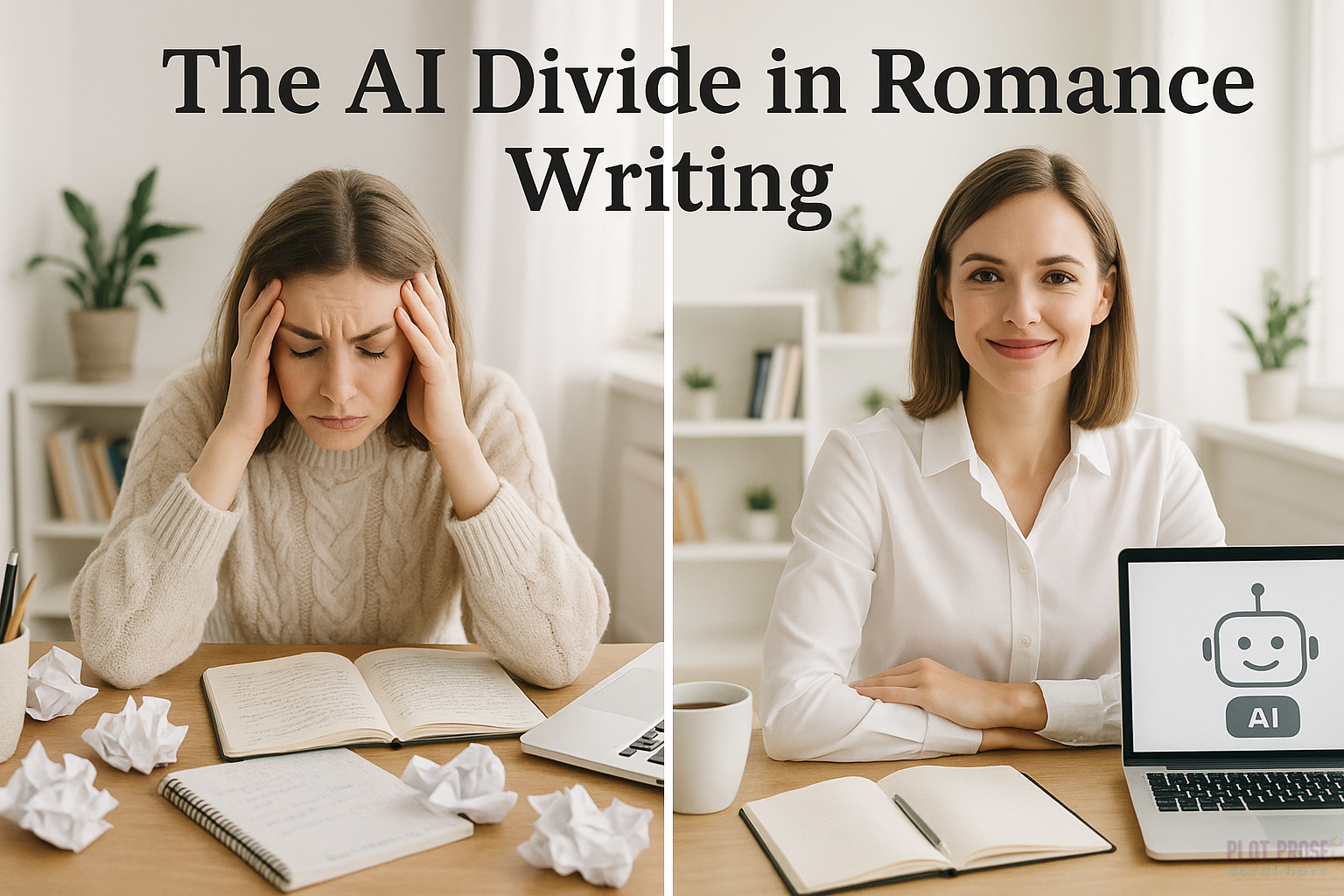
Meanwhile, we’ve got new AI models launching specifically for fiction, ChatGPT rolling out updates faster than TikTok trends, and romance authors splitting into two camps: those who think AI is the devil’s word processor, and those who’ve figured out it’s actually the ultimate writing partner.
Guess which camp is hitting their publishing goals?
The resistance comes from a fundamental misunderstanding. AI doesn’t write your book. It doesn’t steal your voice. What it does is eliminate the tedious stuff that keeps you from writing—the plotting paralysis, the “how do I structure this chapter” spirals, the metadata nightmares that make self-publishing feel like tax preparation.
I’ve watched romance authors transform their entire careers once they stop fighting AI and start leveraging it. They’re not becoming less creative. They’re becoming more strategic, more productive, and honestly? More profitable.
But—and this is crucial—not all AI tools are created equal. The generic writing assistants miss the nuances of romance completely. They don’t understand the emotional beats that make readers swoon, or the specific tropes that sell, or how to craft sexual tension that builds properly.
That’s why romance-specific AI training matters. It’s why understanding prompt engineering for our genre isn’t just helpful—it’s becoming essential. The authors who master this aren’t just keeping up. They’re lapping the competition.
The question isn’t whether AI belongs in romance writing. It’s already here. The question is whether you’re going to learn to use it strategically, or keep pretending it doesn’t exist while your competitors build their empires.
Because while you’re debating AI ethics, someone else is using AI-optimized outlines to write better books faster, generating killer metadata that actually converts, and building sustainable writing businesses that don’t require burnout as fuel.
The future of romance writing isn’t human versus machine. It’s humans with AI versus humans without it.
Ready to join the right side of this revolution? Check out our current giveaway and see what’s possible when you stop fighting the future and start shaping it.